Pollen calendar: which pollen flies when?
Alder in February, birch in April, grass in June, ragweed in September. Here is when the six pollen types behind most hay fever in north-west Europe are in the air — and why a calendar only tells you half the story.
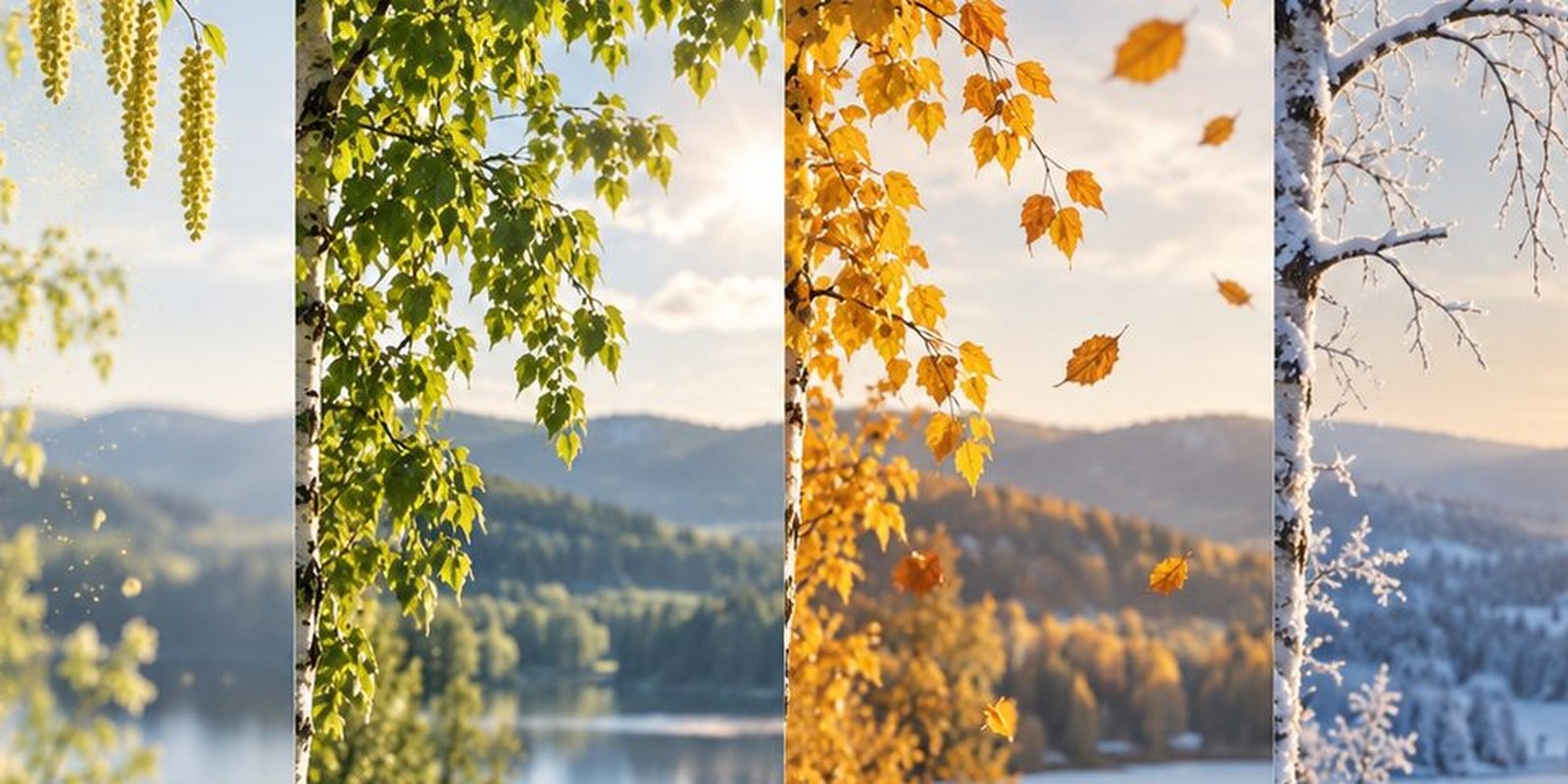
1Alder and hazel — January to April
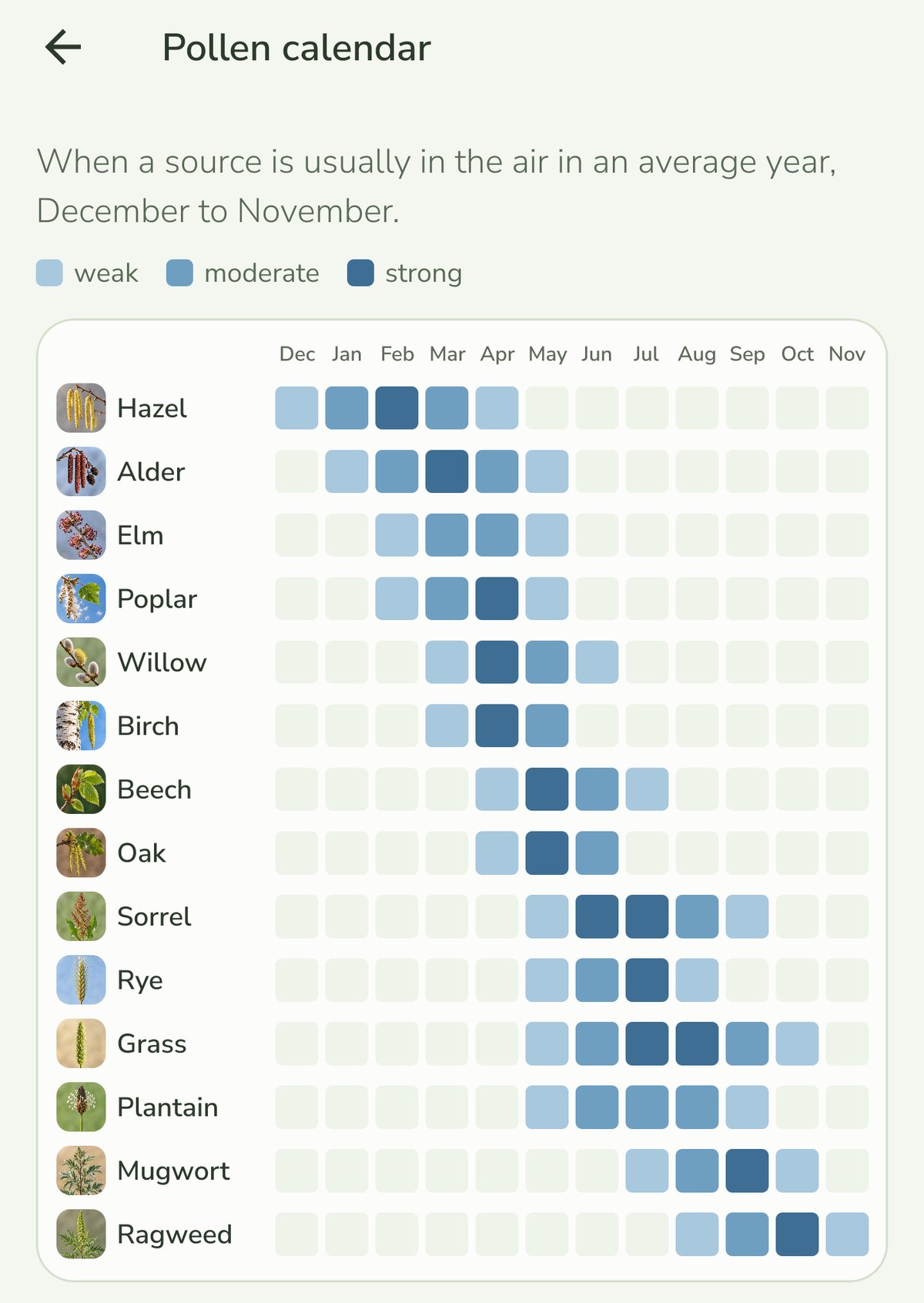
The first of the year, often while it is still freezing. After a mild winter the catkins can start releasing in January, peaking in February and March. Anyone who thinks hay fever is a summer complaint is caught out by these two every spring.
2Birch — March to May
The best-known tree pollen in north-west Europe, and the heaviest for many people. The season is short but fierce: a few weeks around mid-April when concentrations run high. A warm spring pulls those weeks forward.
3Grass — May to August
The largest group. Grasses flower from late May into August, peaking in June. Because grass grows everywhere — verges, meadows, your own lawn — avoiding it is harder than avoiding trees.
4Mugwort — July to September
A herb of roadsides and waste ground. Its season overlaps with the tail of the grass season, so symptoms can continue while the grass is already winding down.
5Olive — April to June
Irrelevant in the Low Countries, important around the Mediterranean. Worth knowing if you travel to southern Europe in spring: you can pick up symptoms there that you never get at home.
6Ragweed — August to October
The latecomer, flowering once the rest are done. Still limited in the Netherlands, a growing problem in central Europe, and slowly moving north.
Why the calendar only tells half the story
These months are averages. A warm spring moves birch forward by weeks, a wet week washes the air clean, and the count ten kilometres away can be different. The biggest variable, though, is you: two people with hay fever in the same street rarely react to the same type. A calendar tells you what is flying, not what you react to.
The only way to learn that is to put your own days next to the measurements — across a season, not a week.
At every check-in Pollenio records these six types for your location, along with the weather and air quality. You only fill in your own day: nose, eyes, airways and sleep. After a season the app shows, per pollen type, whether there is a link — or that there are still too few days to say anything.
Find out for yourself
Pollenio is on Google Play. Logging is free and everything stays on your phone.
Sources: the pollen data in Pollenio comes from Open-Meteo (alder, birch, grass, mugwort, olive and ragweed). The months above are averages for north-west Europe; national pollen monitoring shows shifts of weeks from year to year.
Pollenio is a diary, not a diagnostic or treatment tool. For questions about your symptoms or medication, see your doctor.